
Torsion Testing
Torsion testing is an essential mechanical evaluation for medical devices, ensuring their structural integrity, durability, and performance under rotational forces. Many medical implants and instruments, such as orthopedic screws, cardiovascular guidewires, spinal rods, and catheters, are subjected to torsional stress during clinical use. Failure to withstand these forces can lead to device fracture, reduced efficacy, or even patient harm. By conducting torsion testing, manufacturers can validate design robustness, comply with regulatory requirements (FDA, EU MDR, ISO), and optimize material selection. Meditronics's torsion testing services provide reliable data to support R&D, quality control, and regulatory submissions.
Our Service
Meditronics (a brand of STEMart) offers specialized torsion testing services in compliance with international standards, tailored to different medical device types:
-
ISO 7800 / ASTM A938 – Metallic Wire Torsion Testing
Method: A specimen is twisted until failure to evaluate ductility and fracture resistance.
Test Type: Static torsion (monotonic loading).
Key Metrics: Number of twists before failure, torque at fracture.
Applications: Guidewires, surgical sutures, orthodontic wires. -
ISO 7206-4 / ASTM F382 – Orthopedic Implant Torsion Testing
Method: Measures torsional strength and stiffness of bone plates, screws, and femoral stems.
Test Type: Static and fatigue torsion.
Key Metrics: Maximum torque, angular deformation, fatigue life (S-N curve).
Applications: Hip implants, spinal fixation devices, trauma screws. -
ISO 25539-1 / ASTM F2606 – Cardiovascular Device Torsion Testing
Method: Evaluates torque transmission and kink resistance of guidewires and stents.
Test Type: Static and dynamic torsion (cyclic loading).
Key Metrics: Torqueability, rotational stiffness, fatigue resistance.
Applications: Vascular stents, catheters, delivery systems. -
ASTM E2948 – Small-Specimen Torsion Fatigue Testing
Method: Cyclic torsion testing to simulate long-term in vivo conditions.
Test Type: Fatigue torsion (high-cycle testing).
Key Metrics: Fatigue limit, crack propagation rate.
Applications: Bioabsorbable implants, nitinol devices, micro-medical components.
Why Choose Meditronics?
Meditronics is a trusted partner for medical device manufacturers, offering expertise, cutting-edge technology, and regulatory compliance support:
✔ Regulatory Expertise
Our team deeply understands FDA, ISO, ASTM, and EU MDR requirements, ensuring your device meets global compliance standards. We assist in test protocol design, data interpretation, and regulatory documentation.
✔ State-of-the-Art Equipment
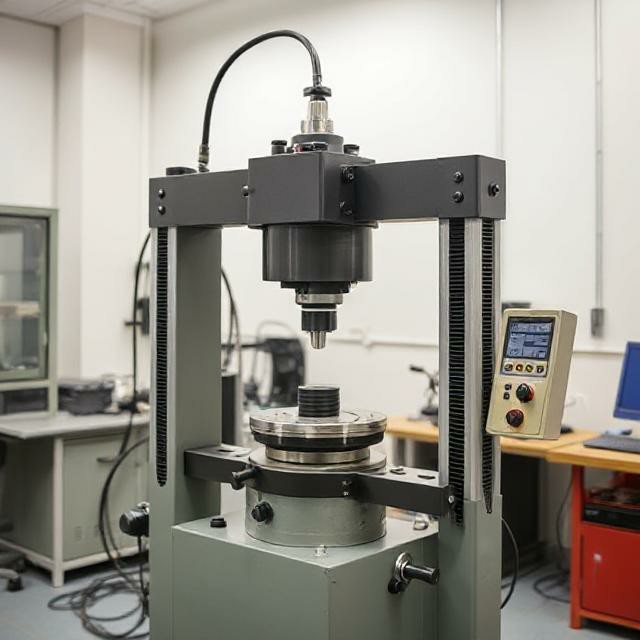
We utilize state-of-the-art torsion test machines (Instron, Zwick) with customized fixtures for different medical devices, including:
- Temperature-controlled environments (simulating body conditions).
- High-precision torque sensors for accurate measurements.
- High-cycle fatigue systems for long-term durability testing.
✔ Fast & Reliable Results
Meditronics delivers repeatable, ISO 17025-accredited test data, critical for design validation and regulatory submissions. Our reports include detailed failure analysis, torque-rotation curves, and compliance statements.
✔ Custom Solutions
From material selection to final product validation, we provide comprehensive testing solutions.
Whether you are developing next-gen stents, orthopedic implants, or minimally invasive tools, Meditronics's torsion testing services ensure safety, compliance, and performance. Contact us today to discuss your testing requirements and receive a customized solution.
Contact Meditronics to request a quote or schedule a consultation.
Online Inquiry
This site is protected by reCAPTCHA and the Google Privacy Policy and Terms of Service apply.
Need More Information or Request A Quotation?
Related Links
